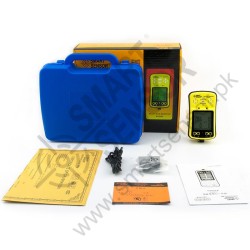
Looking for a Gas Detector in Pakistan? Smart Sensor Pakistan offers a range of portable gas detection and monitoring instruments for industrial safety, gas leak inspection and workplace monitoring.
The Smart Sensor Gas Detection Series includes single-gas detectors, portable multi-gas monitors, combustible gas leak detectors and instruments for monitoring specific industrial gases. These instruments are designed for applications involving carbon monoxide (CO), carbon dioxide (CO₂), hydrogen sulfide (H₂S), oxygen (O₂), ammonia (NH₃), formaldehyde (HCHO), combustible gases and other selected gases.
Whether you need an LPG gas leak detector for inspection, a portable 4-in-1 gas detector for workplace monitoring or a dedicated instrument for a particular gas, choosing the correct detector is important for reliable measurements and safety procedures.
Explore gas detection equipment in Pakistan from Smart Sensor and compare models according to your gas type, measuring range and application.
What Is a Gas Detector?
A gas detector is an electronic instrument designed to identify and measure the concentration of a specific gas or combination of gases in the surrounding environment. It helps users monitor potentially hazardous atmospheric conditions and identify gas leaks or abnormal gas concentrations.
Gas detectors are used in industrial plants, factories, laboratories, commercial buildings, workshops, utility facilities and other environments where gas monitoring is required.
Depending on the instrument, a gas detector may measure toxic gases, combustible gases, oxygen concentration or other specific gases. Readings are commonly displayed in units such as parts per million (ppm), percentage by volume (%VOL) or percentage of the Lower Explosive Limit (%LEL).
Gas Detection Instruments Available at Smart Sensor Pakistan
Smart Sensor Pakistan provides different gas detection categories for monitoring specific gases and industrial atmospheric conditions. Explore the available categories below.
An ammonia gas detector is designed to measure ammonia concentration in the air. It is used in suitable industrial environments, refrigeration facilities, chemical plants and cold storage areas where ammonia monitoring is required.
Example model: AR8500 Smart Sensor.
CO₂ detectors measure carbon dioxide concentration in indoor or industrial environments. They can support indoor air quality monitoring, ventilation assessment and environmental monitoring applications.
Example model: AR8200 Smart Sensor.
Carbon monoxide detectors monitor CO concentration. Carbon monoxide is a hazardous gas that can be produced by incomplete combustion and may accumulate in poorly ventilated areas.
Example model: AS8700A Smart Sensor.
Combustible gas detectors identify flammable gas concentrations and can display readings as a percentage of the Lower Explosive Limit. They are used for gas leak inspection and monitoring suitable industrial environments.
Example models: AP388, AS8800 and AS8800A Smart Sensor.
Formaldehyde detectors monitor HCHO concentration in environments where formaldehyde exposure may be a concern. They are relevant to selected industrial, laboratory and indoor air monitoring applications.
Example model: AR8600L Smart Sensor.
Hydrogen detectors are designed to identify hydrogen gas in applications where leakage or accumulation needs to be monitored. The required sensor type and detection range depend on the application.
H₂S detectors monitor hydrogen sulfide, a toxic gas associated with certain petroleum, wastewater, chemical and industrial processes. Portable H₂S monitoring is useful for appropriate workplace inspection procedures.
Example model: AS8803 Smart Sensor.
A 4-in-1 multi-gas detector monitors four selected gases using one portable instrument. The Smart Sensor ST8900 monitors CO, H₂S, O₂ and combustible gas expressed as %LEL.
Example models: ST8900 and AS8900 Smart Sensor.
NO₂ detectors are designed to monitor nitrogen dioxide concentration in suitable industrial and environmental applications. They can be relevant to workplaces involving combustion processes and selected chemical operations.
Oxygen detectors measure oxygen concentration in the surrounding atmosphere. They are important for monitoring oxygen deficiency or enrichment in suitable industrial and confined-space applications.
Example model: AR8100 Smart Sensor.
Ozone detectors measure ozone concentration in environments where ozone generation or exposure monitoring is required, including selected water treatment, laboratory and industrial applications.
SO₂ detectors are used to monitor sulfur dioxide concentration in suitable industrial environments, including selected chemical, combustion and process applications.
Popular Smart Sensor Gas Detector Models
The Smart Sensor Gas Detection Series includes different instruments for individual gas monitoring, combustible gas leak detection and multi-gas measurement.
The ST8900 is a portable multi-gas monitoring instrument designed to measure four gases simultaneously:
- Carbon Monoxide (CO)
- Hydrogen Sulfide (H₂S)
- Oxygen (O₂)
- Combustible Gas (%LEL)
Published measuring ranges:
- CO: 0–999 ppm
- H₂S: 0–500 ppm
- O₂: 0–30%VOL
- Combustible gas: 0–100%LEL
Listed features include an LCD display, sound, light and vibration alarms, high and low alarm settings, STEL/TWA alarm functions and a rechargeable battery.
View ST8900 Product Details
The AS8900 is a multi-gas detector designed to monitor oxygen, carbon monoxide, hydrogen sulfide and combustible gas.
Published measuring ranges:
- O₂: 0–30%VOL
- CO: 0–999 ppm
- H₂S: 0–500 ppm
- Combustible gas: 0–100%LEL
The listed specifications include electrochemical sensing, adjustable high and low alarms, and sound and light alerts.
View AS8900 Product Details
The AP388 is a compact, pen-style gas leak detector designed for detecting methane and LPG leaks in suitable residential and light industrial applications.
Its portable form makes it useful for checking suspected gas leakage points and conducting inspection tasks according to the product's operating instructions.
View AP388 Product Details
The AS8700A is a dedicated carbon monoxide detector designed to measure CO concentration. The published product information lists a measurement range of 0–1000 ppm and 1 ppm resolution.
View AS8700A Product Details
The AR8500 is a portable ammonia gas detector designed for monitoring NH₃ in suitable industrial and commercial environments.
It is relevant to applications such as refrigeration facilities, chemical operations and industrial ammonia monitoring.
View AR8500 Product Details
The AR8100 is a portable oxygen detector designed to measure oxygen concentration in air environments. It can be considered for applications where oxygen-level monitoring is required.
View AR8100 Product Details
The AS8803 is a portable H₂S detector designed for monitoring hydrogen sulfide concentration in suitable industrial environments.
View AS8803 Product Details
The AS8902 is listed as a portable digital combustible gas detector. Its product description identifies gases including methane, ethanol, ammonia, propane, butane and hydrogen.
View AS8902 Product Details
Different Types of Gases Detected by Gas Monitoring Instruments
Gas detection equipment is selected according to the type of gas that needs to be monitored. Different gases have different properties, exposure risks and detection requirements.
| Gas |
Symbol |
Common Monitoring Purpose |
| Carbon Monoxide |
CO |
Monitoring toxic gas produced by incomplete combustion |
| Carbon Dioxide |
CO₂ |
Indoor air quality and process monitoring |
| Hydrogen Sulfide |
H₂S |
Monitoring hazardous gas in petroleum, wastewater and industrial environments |
| Oxygen |
O₂ |
Monitoring oxygen deficiency or enrichment |
| Ammonia |
NH₃ |
Refrigeration, chemical and industrial monitoring |
| Methane |
CH₄ |
Combustible gas leak inspection |
| Formaldehyde |
HCHO |
Indoor and industrial exposure monitoring |
| Nitrogen Dioxide |
NO₂ |
Combustion-related and industrial gas monitoring |
| Ozone |
O₃ |
Ozone-generating processes and environmental monitoring |
| Sulfur Dioxide |
SO₂ |
Industrial emissions and process monitoring |
| Hydrogen |
H₂ |
Hydrogen leakage and process monitoring |
How Does a Gas Detector Work?
A gas detector uses a sensor designed to respond to a particular gas or group of gases. When the target gas reaches the sensor, the instrument processes the sensor response and displays a concentration reading or alarm condition.
The operating principle depends on the sensor technology and the gas being measured.
1. Electrochemical Sensors
Electrochemical sensors are commonly used for detecting selected toxic gases and oxygen. They produce an electrical response related to the concentration of the target gas.
2. Infrared Sensors
Infrared gas sensors measure the absorption of infrared light at particular wavelengths. They are used in suitable applications for gases such as carbon dioxide and certain hydrocarbons.
3. Catalytic Bead Sensors
Catalytic bead sensors are used for detecting many combustible gases. They measure changes associated with catalytic oxidation of the target gas on the sensor element.
4. Semiconductor Sensors
Semiconductor gas sensors detect changes in electrical properties when certain gases interact with the sensing material. They are used in selected gas leak detection applications.
Important: Not every Smart Sensor gas detector uses all these technologies. The correct sensor technology depends on the particular model and target gas. Always check the product specifications before selecting an instrument.
Gas Detector Applications in Industrial and Commercial Environments
Oil and Gas Industry
Gas detectors are used for monitoring selected toxic, combustible and oxygen-related atmospheric hazards around oil and gas operations, pipelines and maintenance areas.
Chemical and Petrochemical Plants
Dedicated gas monitors help identify the presence of selected hazardous gases during plant operations, inspections and maintenance activities.
Wastewater Treatment
Gas monitoring is important in wastewater facilities where gases such as hydrogen sulfide may be present.
Confined Space Monitoring
Suitable portable multi-gas monitors can help assess oxygen concentration, toxic gases and combustible gas hazards before and during authorised confined-space work.
Manufacturing and Industrial Facilities
Gas detection instruments support workplace monitoring and inspection in factories, production facilities and industrial processing areas.
Refrigeration and Cold Storage
Dedicated ammonia gas detectors can be used in suitable refrigeration and cold storage facilities where NH₃ monitoring is required.
Laboratories
Single-gas detectors can be selected for monitoring specific gases used or generated in laboratory processes.
Commercial and Residential Gas Inspection
Portable combustible gas leak detectors can assist with checking suspected LPG or natural gas leakage points, according to the detector's supported gas types.
Important Features of Modern Gas Detection Instruments
Gas detector features vary by model. Depending on the instrument, useful functions may include:
- Digital LCD Display: Displays measured gas concentration and instrument status.
- Audible Alarm: Provides a sound warning when configured alarm conditions are reached.
- Visual Alarm: Uses indicator lights or display alerts to communicate alarm conditions.
- Vibration Alarm: Provides an additional warning method on supported portable models.
- High and Low Alarm Settings: Allows alarm thresholds to be configured on supported instruments.
- Rechargeable Battery: Provides portable operation on models equipped with rechargeable batteries.
- Data Monitoring: Some instruments support additional functions for recording or reviewing measurement information.
- Portable Design: Handheld instruments are useful for field inspections and mobile monitoring tasks.
Gas Detector Measurement Units Explained
Gas detection instruments use different measurement units depending on the gas and application.
PPM – Parts Per Million
PPM represents the concentration of a gas in one million parts of a gas mixture. It is commonly used for measuring low concentrations of toxic gases and other target gases.
%VOL – Percentage by Volume
Percentage by volume represents the proportion of a gas in the total air or gas mixture. Oxygen detectors commonly display concentration in %VOL.
%LEL – Percentage of Lower Explosive Limit
LEL means Lower Explosive Limit. A reading in %LEL indicates the measured combustible gas concentration relative to the gas's lower explosive limit.
Remember: PPM, %VOL and %LEL are different measurement units and should not be interpreted as interchangeable values. Select the unit and measuring range appropriate for the target gas and application.
How to Choose the Right Gas Detector
Choosing the correct gas detector is important for reliable monitoring. Before purchasing a gas detection instrument in Pakistan, consider the following factors.
1. Identify the Target Gas
Determine which gas needs to be monitored, such as CO, CO₂, H₂S, O₂, NH₃, methane or LPG. A detector designed for one gas may not detect another gas.
2. Select Single-Gas or Multi-Gas Detection
A single-gas detector is suitable when one specific gas needs to be monitored. A multi-gas detector is useful when several specified gases need to be measured simultaneously.
3. Check the Measuring Range
Compare the detector's measuring range with the expected concentration and requirements of your application.
4. Review the Sensor Technology
Check whether the detector uses an appropriate electrochemical, infrared, catalytic or other sensor technology for the target gas.
5. Check Alarm Functions
Review audible, visual and vibration alarms, alarm thresholds and any available exposure-monitoring functions.
6. Consider Portability and Battery Life
For field inspections, consider instrument size, battery type, operating duration and charging requirements.
7. Review Calibration and Maintenance Requirements
Check the manufacturer's instructions for calibration, bump testing, sensor replacement and maintenance. These procedures are important for maintaining detector reliability.
Gas Detector Price in Pakistan
The gas detector price in Pakistan depends on the type of gas being detected, sensor technology, measuring range, number of gases monitored, alarm functions and additional features.
A portable LPG gas leak detector, a dedicated carbon monoxide meter and a professional 4-in-1 multi-gas monitor have different measurement capabilities and specifications. Therefore, compare instruments according to the actual application rather than price alone.
Smart Sensor Pakistan offers different gas detection instruments, including:
For the latest product price and availability, visit the individual product pages or contact Smart Sensor Pakistan.
Gas Detector Safety, Calibration and Maintenance
Gas detectors are safety instruments. Correct selection, operation and maintenance are essential for dependable gas monitoring.
- Use a detector specifically designed for the gas you need to monitor.
- Read and follow the manufacturer's operating instructions.
- Perform calibration and bump testing according to the manufacturer's recommendations and applicable workplace procedures.
- Check sensor condition, battery level and alarm operation before use.
- Do not ignore warning alarms or unusual instrument readings.
- Follow workplace gas monitoring and emergency response procedures.
- Use suitable certified equipment where required by hazardous-area regulations.
Safety Warning: A portable gas detector does not replace a complete workplace safety system, ventilation controls, confined-space entry procedures or emergency response arrangements. Never enter a potentially hazardous atmosphere based only on one detector reading. Use properly selected and maintained equipment and follow your organisation's approved safety procedures.
Related Testing and Monitoring Instruments
Explore other Smart Sensor product categories for environmental monitoring, air quality measurement and industrial testing.
Why Choose Smart Sensor Pakistan?
- Gas Detection Product Range: Explore single-gas and multi-gas detection instruments for different applications.
- Multiple Gas Categories: Find detectors for CO, CO₂, H₂S, O₂, NH₃, combustible gases and other selected gases.
- Portable Monitoring Options: Compare handheld gas detectors for suitable field inspection requirements.
- Product Specifications: Review model-specific measurement ranges, sensor functions and alarm features.
- Customer Assistance: Contact the team for product information, pricing and availability.
Frequently Asked Questions About Gas Detectors
1. What is a gas detector used for?
A gas detector is used to identify and measure the concentration of specific gases in the surrounding environment. It helps monitor toxic gases, combustible gases and oxygen levels in industrial, commercial and other suitable environments.
2. What is the price of a gas detector in Pakistan?
The gas detector price in Pakistan depends on the target gas, sensor type, measuring range, alarm functions and whether the instrument detects one gas or multiple gases. Check Smart Sensor Pakistan product pages for current prices and availability.
3. What is the difference between a single-gas detector and a multi-gas detector?
A single-gas detector is designed to monitor one specific gas, such as carbon monoxide or hydrogen sulfide. A multi-gas detector can monitor several selected gases simultaneously, depending on its sensor configuration.
4. What gases can a gas detector detect?
Depending on its sensor and model, a gas detector can monitor gases such as carbon monoxide, carbon dioxide, hydrogen sulfide, oxygen, ammonia, methane, hydrogen, formaldehyde, nitrogen dioxide, ozone and sulfur dioxide.
5. What is a 4-in-1 gas detector?
A 4-in-1 gas detector is a portable instrument designed to monitor four selected gases using one device. The Smart Sensor ST8900 detects carbon monoxide (CO), hydrogen sulfide (H₂S), oxygen (O₂) and combustible gas (%LEL).
6. Which gases does the ST8900 Smart Sensor detect?
The ST8900 Smart Sensor detects carbon monoxide (CO), hydrogen sulfide (H₂S), oxygen (O₂) and combustible gas expressed as a percentage of the Lower Explosive Limit (%LEL).
7. What is the difference between a gas leak detector and a gas monitor?
A gas leak detector is generally used to locate or identify the presence of a leaking gas. A gas monitor measures gas concentration in the surrounding atmosphere. Some portable instruments provide both leak detection and concentration monitoring functions, depending on their design.
8. What does LEL mean in gas detection?
LEL stands for Lower Explosive Limit. It is the minimum concentration of a combustible gas in air that can ignite under specified conditions. Gas detectors may display combustible gas concentration as a percentage of the LEL.
9. What is the difference between PPM and %LEL?
PPM means parts per million and is commonly used to express gas concentration. %LEL expresses combustible gas concentration relative to its lower explosive limit. They represent different measurement concepts and are not interchangeable.
10. Which gas detector is suitable for LPG leakage?
Select a detector specifically designed to detect LPG or its relevant combustible gas components. The Smart Sensor AP388 is listed as a portable LPG gas leak detector for methane and LPG leak inspection applications. Confirm the supported gas types before purchasing.
11. Can a gas detector detect natural gas?
Some combustible gas detectors are designed to detect natural gas components such as methane. However, not every gas detector can detect natural gas. Check the instrument's supported gas list and sensor specifications before use.
12. What is a carbon monoxide detector used for?
A carbon monoxide detector measures CO concentration in the surrounding air. Carbon monoxide can be produced by incomplete combustion and is hazardous when inhaled, making suitable CO monitoring important in relevant environments.
13. What is an H₂S gas detector used for?
An H₂S gas detector monitors hydrogen sulfide concentration. It is used in suitable petroleum, wastewater, chemical and industrial environments where hydrogen sulfide may be present.
14. Why is an oxygen detector important in confined spaces?
An oxygen detector measures oxygen concentration and can help identify oxygen-deficient or oxygen-enriched atmospheric conditions. Oxygen monitoring is an important part of appropriate confined-space safety procedures.
15. What sensor technologies are used in gas detectors?
Gas detectors may use electrochemical, infrared, catalytic bead, semiconductor or other sensing technologies. The correct sensor depends on the target gas, measurement range and intended application.
16. How often should a gas detector be calibrated?
Calibration frequency depends on the instrument manufacturer's instructions, sensor type, usage conditions and applicable workplace safety requirements. Follow the manufacturer's recommended calibration schedule and perform bump testing as required by your safety procedure.
17. Can one gas detector detect all types of gases?
No. A gas detector can only detect gases supported by its sensor configuration. A multi-gas detector monitors a defined combination of gases, not every possible industrial gas. Select an instrument according to the specific gases present in your environment.
18. Where can I buy gas detectors in Pakistan?
You can explore portable gas detectors, combustible gas leak detectors and multi-gas monitoring instruments from Smart Sensor Pakistan Gas Detection Series. Visit the relevant product pages for specifications, current prices and availability.
Buy Gas Detection Instruments in Pakistan
Looking for a portable gas detector, LPG gas leak detector, carbon monoxide monitor, oxygen detector or 4-in-1 multi-gas instrument? Explore the Smart Sensor Gas Detection Series and select a model according to your monitoring requirements.
Explore All Gas Detectors:
Gas Detection Series in Pakistan
Smart Sensor Pakistan – Contact our team for product specifications, latest prices and availability.