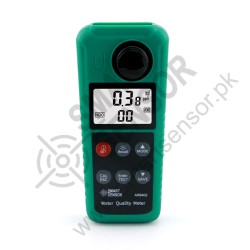
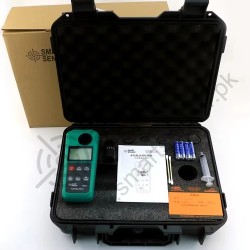
Water Quality Tester in Pakistan – Digital Water Testing Instruments
Looking for a reliable Water Quality Tester in Pakistan?
Smart Sensor Pakistan offers a range of digital water testing instruments
designed to measure important water parameters for laboratories, water
treatment facilities, agriculture, aquaculture, food processing, industrial
applications and general water monitoring.
A water quality tester is an electronic measuring instrument used to check
selected physical and chemical characteristics of water. Depending on the
model, these instruments can measure Total Dissolved Solids (TDS),
electrical conductivity (EC), pH, salinity, dissolved oxygen (DO),
temperature and other water-related parameters.
Whether you need a portable TDS meter for routine water checks, a digital
pH meter for laboratory testing, a salinity tester for aquaculture or a
dissolved oxygen meter for fish farming, selecting the correct instrument
is important for obtaining meaningful measurement results.
Explore water testing instruments from Smart Sensor Pakistan.
Compare different measurement types and choose an instrument according
to your application, required measuring range, accuracy and testing method.
What Is a Water Quality Tester?
A water quality tester is a measuring device used to
evaluate specific characteristics of a water sample. It helps users
monitor changes in water conditions and maintain process quality in
residential, commercial, agricultural and industrial environments.
Different instruments measure different parameters. For example, a TDS
meter estimates the concentration of dissolved solids, a pH meter measures
acidity or alkalinity, and a dissolved oxygen meter measures the amount
of oxygen dissolved in water.
It is important to understand that no single basic tester measures every
possible contaminant. The correct instrument depends on which water
quality parameter needs to be monitored.
Types of Water Quality Testers Available in Pakistan
1. Digital TDS and Conductivity Meters
A TDS meter is used to estimate the total dissolved
solids concentration in water, generally displayed in ppm or mg/L.
Conductivity meters measure the ability of water to conduct electrical
current, usually displayed in µS/cm or mS/cm.
Many digital COND/TDS meters measure both electrical conductivity and
estimated TDS, with some models also displaying temperature. They are
commonly used for RO water monitoring, hydroponics, aquariums, agriculture,
laboratories and industrial water treatment.
Explore our
COND/TDS Meters
or view the
AR8011 Smart Sensor
for a portable EC, TDS and temperature testing option.
2. Digital pH Meters
A digital pH meter measures the acidity or alkalinity
of a liquid. The pH scale is commonly represented from 0 to 14, with
pH 7 considered neutral under standard conditions. Values below 7 are
acidic, while values above 7 are alkaline.
pH meters are used in drinking water monitoring, laboratories, swimming
pools, aquaculture, hydroponics, food processing and industrial water
treatment. Depending on the application, users can select a pen-type
tester or a meter with a separate probe.
Browse our
Digital pH Meters,
including the
PH808 Smart Sensor
and
AS218 Smart Sensor.
3. Water Salinity Meters
A salinity meter measures the concentration of dissolved
salts in water. Depending on the instrument, results may be displayed
in ppm or ppt. These meters are useful for fish farms, aquaculture,
marine water monitoring, agriculture, hydroponics, food processing
and water treatment applications.
Select a salinity meter according to the expected salt concentration
and required measurement range. A freshwater application and a seawater
application may require different measuring ranges.
Explore our
Salinity Meters,
including the
AR8012 Smart Sensor
and
AR8012A Smart Sensor.
4. Dissolved Oxygen (DO) Meters
A dissolved oxygen meter measures the amount of oxygen
dissolved in water. Readings are commonly displayed in mg/L or ppm.
Dissolved oxygen monitoring is particularly important in aquaculture,
fish farming, wastewater treatment, environmental monitoring and
laboratory water analysis.
Some portable DO meters include temperature compensation, salinity
compensation, altitude compensation, data storage and remote probes.
These functions can be useful when testing water at different locations
or under changing environmental conditions.
View our
Dissolved Oxygen Meters,
including the
AR8210 Smart Sensor
and
AR8406 Smart Sensor.
5. Food pH Meters
Food pH meters are designed for measuring the pH of suitable food
products and semi-solid samples. Depending on the probe design, they
can be used for products such as fruits, vegetables, sauces, pastes
and other food materials.
These instruments support quality control in food production,
processing and laboratory applications. Always check the probe design
and compatibility with the sample before selecting a food pH meter.
Explore the
PH818M Smart Sensor Food pH Meter.
6. Soil pH Meters
A soil pH meter is used to check the acidity or
alkalinity of soil. Soil pH can influence nutrient availability and
growing conditions for plants and crops.
Soil testing instruments are useful for agriculture, gardening,
nurseries, greenhouses and horticultural applications. Select a
soil tester according to the required measurement method and
application.
Explore our
Soil pH Meters
and the
PH328 Smart Sensor.
7. Residual Chlorine and Turbidity Testing
Residual chlorine testing is used to measure the amount of chlorine
remaining in treated water after disinfection. Turbidity testing
measures the cloudiness of water caused by suspended particles.
These are separate measurements and require suitable instruments.
For applications where disinfection control or water clarity is
important, choose a dedicated residual chlorine meter or turbidity
meter with the appropriate measuring range and method.
Water Quality Parameters Explained
Understanding the difference between water quality parameters helps
you select the correct testing instrument. The following table
summarizes common measurements and their applications.
| Parameter |
What It Measures |
Common Units |
Typical Applications |
| TDS |
Estimated concentration of dissolved solids |
ppm, mg/L |
RO systems, water monitoring, hydroponics |
| EC |
Electrical conductivity of water |
µS/cm, mS/cm |
Agriculture, laboratories, water treatment |
| pH |
Acidity or alkalinity of a solution |
pH units |
Drinking water checks, food, pools, laboratories |
| Salinity |
Salt concentration in water |
ppm, ppt, % |
Aquaculture, marine water, agriculture |
| Dissolved Oxygen |
Oxygen dissolved in water |
mg/L, ppm |
Fish farms, wastewater, environmental testing |
| Residual Chlorine |
Remaining chlorine in treated water |
mg/L |
Water disinfection and treatment monitoring |
| Turbidity |
Cloudiness caused by suspended particles |
NTU |
Water treatment and environmental monitoring |
| Temperature |
Temperature of the water sample |
°C, °F |
Laboratory, aquaculture and industrial testing |
Popular Smart Sensor Water Quality Testing Instruments
Smart Sensor Pakistan offers different instruments for specific
water testing requirements. The following models are listed on
our website. Please confirm current price, stock status and
included accessories before ordering.
| Model |
Instrument Type |
Measurement / Application |
Product Details |
| AR8011 |
COND/TDS Meter |
EC, estimated TDS and temperature |
View Product |
| AR8210 |
Dissolved Oxygen Meter |
DO and temperature |
View Product |
| AR8406 |
Split-Type DO Meter |
Dissolved oxygen and temperature |
View Product |
| AR8012 |
Salinity Meter |
Water salinity and temperature |
View Product |
| AR8012A |
Salinity Meter |
Salt concentration in water |
View Product |
| AS218 |
Split-Type pH Meter |
pH measurement |
View Product |
| PH808 |
Pen-Type pH Meter |
pH and temperature |
View Product |
| PH818M |
Food pH Meter |
pH testing in compatible food samples |
View Product |
| PH328 |
Soil pH Tester |
Soil pH, moisture and temperature functions |
View Product |
Applications of Water Quality Testers
Drinking Water and RO Filtration Systems
TDS and pH meters can help users monitor selected characteristics
of drinking water and check changes in RO filtration performance.
However, these readings do not replace laboratory testing for
microbiological and chemical contaminants.
Water Treatment Plants
Water treatment facilities use suitable testing instruments to
monitor parameters such as pH, conductivity, residual chlorine,
turbidity and dissolved oxygen, depending on the treatment process.
Aquaculture and Fish Farming
Fish farms and aquaculture facilities monitor dissolved oxygen,
salinity, pH and temperature to maintain suitable water conditions
for aquatic organisms.
Agriculture and Hydroponics
Farmers and hydroponic growers use EC, TDS and pH meters to monitor
irrigation water and nutrient solutions. Salinity testing can also
help assess salt concentration in water used for crops.
Food and Beverage Industry
Food processing facilities use suitable pH meters to monitor
acidity in compatible products and support production quality
control and process consistency.
Laboratories and Environmental Monitoring
Laboratories and environmental professionals use different
water testing instruments to assess selected characteristics
of water samples for research, quality control and monitoring.
How to Choose the Right Water Quality Tester
Before purchasing a water quality meter, identify the parameter
you need to measure and the environment in which the instrument
will be used. Consider the following factors:
- Measurement parameter: Decide whether you need to measure TDS, EC, pH, salinity, dissolved oxygen, chlorine or turbidity.
- Measurement range: Select a meter that covers the expected values of your water samples.
- Accuracy and resolution: Check the instrument's specifications to ensure they meet your testing requirements.
- Probe design: Choose a suitable probe for liquid samples, food products or field measurements.
- Calibration: Check calibration requirements, available standards and the ease of calibration.
- Temperature compensation: Consider ATC where it is relevant to the measurement and instrument.
- Display and data functions: Backlit displays, data hold, memory and data output can be useful for regular testing.
- Portability: Select a pen-type or handheld meter for field use, or a suitable laboratory instrument for bench testing.
- Maintenance: Check electrode storage, probe replacement, cleaning and calibration requirements.
Difference Between TDS, EC and pH Meters
TDS, EC and pH meters are often used together in water testing,
but they do not measure the same property.
| Meter |
Main Function |
Typical Display |
| TDS Meter |
Estimates dissolved-solids concentration, commonly from EC |
ppm or mg/L |
| EC Meter |
Measures electrical conductivity |
µS/cm or mS/cm |
| pH Meter |
Measures acidity or alkalinity |
pH units |
A higher TDS reading generally indicates more dissolved ionic
material, but it does not identify which substances are present.
Likewise, pH does not indicate the total dissolved solids
concentration. Select each instrument according to the parameter
you need to monitor.
Can a TDS Meter Confirm That Drinking Water Is Safe?
No. A TDS meter alone cannot confirm that drinking water is safe
for consumption. It estimates the concentration of dissolved
solids, but it does not identify individual substances or detect
all possible contaminants.
Water may contain bacteria, viruses, pesticides, heavy metals
or other substances that a basic TDS meter cannot detect.
Drinking water safety requires testing appropriate to the
possible contaminants and applicable water-quality standards.
Use a TDS meter for routine dissolved-solids monitoring, and
arrange suitable laboratory analysis when you need to assess
drinking water safety.
Calibration and Maintenance of Water Quality Meters
Regular calibration and correct handling help maintain reliable
readings. Follow the manufacturer's instructions for the
specific instrument and probe.
- Calibrate pH meters using suitable certified buffer solutions.
- Use appropriate conductivity standards for EC meter calibration.
- Rinse probes as recommended between different samples.
- Store pH electrodes using the recommended storage solution; do not allow them to dry unless the manufacturer specifies otherwise.
- Keep connectors and electronic components protected from moisture.
- Replace damaged or worn electrodes when required.
- Follow the manufacturer's instructions for dissolved oxygen probe maintenance and electrolyte or membrane replacement, where applicable.
- Record calibration and maintenance activities for routine quality control.
Why Choose Smart Sensor Pakistan?
Smart Sensor Pakistan provides a range of portable testing and
measurement instruments for professional, industrial, laboratory
and field applications. Our water quality product range includes
instruments for pH, conductivity, TDS, salinity and dissolved
oxygen measurements.
- Different water testing instruments for specific measurement requirements.
- Portable digital meters for field and routine testing.
- Product options for laboratories, agriculture, aquaculture and industrial applications.
- Technical product information to help customers select suitable instruments.
- Customer support for product inquiries and quotations.
Learn more about
Smart Sensor Pakistan
or contact our team through the
Contact Us page
for product details and availability.
Buy Water Quality Tester in Pakistan
Find a suitable digital water quality tester for your laboratory,
agriculture, aquaculture, water treatment or industrial
application. Explore the available Smart Sensor models and
select an instrument according to your required measurement
parameter and specifications.
Visit Smart Sensor Pakistan for water quality testing
instruments, product information and current availability.
Explore Water Quality Testers
|
Contact Smart Sensor Pakistan
Frequently Asked Questions About Water Quality Testers
1. What is a water quality tester used for?
A water quality tester is used to measure selected properties
of water, such as TDS, electrical conductivity, pH, salinity
and dissolved oxygen. The exact parameters depend on the
instrument model.
2. What is the price of a water quality tester in Pakistan?
The price of a water quality tester in Pakistan depends on
its measurement functions, accuracy, measuring range, probe
design and additional features. Contact Smart Sensor Pakistan
or check the product listing for the latest price and availability.
3. Which water quality tester is best for drinking water?
A TDS meter and pH meter can be useful for checking selected
characteristics of drinking water. However, neither instrument
can independently confirm that water is safe to drink. Suitable
laboratory testing is required to assess microbiological and
chemical contaminants.
4. What is the difference between a TDS meter and a pH meter?
A TDS meter estimates the concentration of dissolved solids
in water, usually in ppm or mg/L. A pH meter measures the
acidity or alkalinity of water and displays the result in
pH units. They measure different properties.
5. What does TDS mean in water testing?
TDS stands for Total Dissolved Solids. It refers to dissolved
substances such as salts and minerals present in water.
TDS meters commonly estimate this value using electrical
conductivity and a conversion factor.
6. What is a good TDS level for drinking water?
TDS levels are often considered in relation to taste,
acceptability and the composition of dissolved substances.
The World Health Organization has not established a
health-based guideline value for TDS itself. A TDS reading
alone should not be used to determine drinking water safety.
7. Can a TDS meter detect bacteria in water?
No. A standard TDS meter cannot detect bacteria, viruses
or other microorganisms. Microbiological testing requires
appropriate laboratory methods or dedicated testing systems.
8. Can a TDS meter detect heavy metals?
A basic TDS meter cannot identify or measure individual
heavy metals such as lead, arsenic or mercury. Specific
chemical analysis or suitable laboratory instruments are
required to test for these contaminants.
9. What is the difference between TDS and EC?
EC measures the electrical conductivity of water, while
TDS represents an estimate of the dissolved-solids
concentration. Many TDS meters calculate an estimated
TDS value from the EC measurement using a conversion factor.
10. What is a normal pH level for drinking water?
Drinking water pH is commonly assessed against applicable
local standards and guidelines. For reference, the US EPA
lists a secondary pH range of 6.5 to 8.5. This is an
aesthetic guideline and should not be treated as a complete
drinking water safety test.
11. What is a water conductivity meter used for?
A conductivity meter measures how easily electrical current
passes through water. It is commonly used to monitor dissolved
ionic substances in applications such as agriculture,
hydroponics, laboratories and industrial water treatment.
12. What is a salinity meter used for?
A salinity meter measures the concentration of dissolved
salts in water. It is useful in aquaculture, fish farming,
marine water testing, agriculture, hydroponics and water
treatment applications.
13. What is a dissolved oxygen meter?
A dissolved oxygen meter measures the amount of oxygen
dissolved in water, commonly in mg/L. It is used in
aquaculture, wastewater treatment, environmental monitoring
and laboratory water analysis.
14. Why is dissolved oxygen important for fish farming?
Dissolved oxygen is important because fish and other aquatic
organisms need oxygen in water for respiration. Monitoring
dissolved oxygen helps fish farmers assess water conditions
and manage aeration when necessary.
15. What is ATC in a water quality meter?
ATC stands for Automatic Temperature Compensation. In
instruments that support this feature, temperature
compensation helps adjust certain measurements for the
effect of sample temperature. Its operation and suitability
depend on the measurement type and instrument design.
16. How often should a pH meter be calibrated?
Calibration frequency depends on how often the meter is
used, the accuracy required, sample conditions and the
manufacturer's instructions. For critical measurements,
calibrate before testing or at the intervals specified
by the instrument manufacturer.
17. How do I calibrate a digital TDS meter?
TDS meter calibration procedures vary by model. Some
instruments use conductivity calibration solutions and
others have specific calibration procedures. Always use
the correct standard and follow the manufacturer's manual.
18. Which water tester is suitable for an RO system?
A TDS or conductivity meter is commonly used to monitor
changes in dissolved-solids readings before and after an
RO filtration system. These readings can help assess
performance trends but do not confirm the removal of
every possible contaminant.
19. Can one water quality meter measure TDS, pH and salinity?
Some multiparameter instruments offer several measurement
functions, but not every water quality meter measures
TDS, pH and salinity together. Check the product
specifications to confirm the supported parameters,
probes and measurement ranges.
20. Where can I buy a water quality tester in Pakistan?
You can explore water quality testing instruments from
Smart Sensor Pakistan. Visit the Water Quality Tester
category to compare available models or contact the
sales team for product information, current pricing
and availability.