COND/TDS Meter
COND / TDS Meter in Pakistan – Digital Conductivity and TDS Testing Instruments
Looking for a reliable COND / TDS Meter in Pakistan? Smart Sensor Pakistan offers digital conductivity and TDS testing instruments designed for monitoring dissolved ionic substances in water. These portable meters are useful for water treatment, reverse osmosis (RO) systems, agriculture, hydroponics, aquaculture, laboratories and industrial water monitoring.
A Conductivity (COND) / Total Dissolved Solids (TDS) Meter is an electronic water testing instrument that measures electrical conductivity and, depending on the model, calculates an estimated TDS value. These measurements help users monitor changes in dissolved ionic content and assess water conditions for specific applications.
Conductivity is commonly displayed in microsiemens per centimetre (µS/cm) or millisiemens per centimetre (mS/cm), while TDS is generally displayed in parts per million (ppm) or milligrams per litre (mg/L). Many modern portable meters also display water temperature and include automatic temperature compensation (ATC).
What Is a COND / TDS Meter?
A COND/TDS meter is a portable electronic instrument used to measure the electrical conductivity of a liquid and estimate its total dissolved solids concentration. It helps users understand changes in the concentration of dissolved ions, such as salts and minerals, in a water sample.
Electrical conductivity depends on the presence and mobility of dissolved ions in water. A higher conductivity reading generally indicates a greater concentration of dissolved ionic substances. However, conductivity does not identify the individual substances present in the sample.
A TDS reading on many portable meters is calculated from conductivity using a selected conversion factor. The conversion factor can vary depending on the composition of the water, so the displayed TDS value should be understood as an estimate unless the instrument uses a separately specified measurement method.
How Does a Conductivity and TDS Meter Work?
A conductivity meter uses an electrode or sensor probe to measure how easily electrical current passes through a liquid. Dissolved ions in water carry electrical charge, allowing the instrument to measure the solution's electrical conductivity.
When the instrument also displays TDS, it converts the conductivity measurement into an estimated dissolved-solids value using a programmed conversion factor. Some instruments also measure temperature and compensate for temperature-related changes in conductivity.
Basic Measurement Process
- Switch on the COND/TDS meter and select the required measurement mode.
- Rinse the probe according to the manufacturer's instructions.
- Place the sensor in the water sample at the recommended immersion depth.
- Allow the reading to stabilize.
- Read the conductivity, estimated TDS or temperature value on the display.
- Rinse and store the probe according to the instrument manual after testing.
Difference Between COND, EC and TDS
COND and EC are commonly used to refer to electrical conductivity. TDS is a different parameter, although many portable instruments calculate and display both values using the same conductivity sensor.
| Measurement | Full Form | What It Indicates | Common Units |
|---|---|---|---|
| COND | Conductivity | Electrical conductivity of a liquid | µS/cm, mS/cm |
| EC | Electrical Conductivity | Ability of water to conduct electrical current | µS/cm, mS/cm |
| TDS | Total Dissolved Solids | Estimated concentration of dissolved substances | ppm, mg/L, ppt |
| Temperature | Water Temperature | Temperature of the tested liquid | °C, °F |
What Is the Difference Between a TDS Meter and a Conductivity Meter?
A conductivity meter directly measures the electrical conductivity of a solution. A TDS meter generally uses conductivity readings to estimate the total dissolved solids concentration.
For example, a conductivity reading may be displayed in µS/cm, while the corresponding estimated TDS value may appear in ppm. The conversion depends on the selected factor and the chemical composition of the water.
Some digital COND/TDS meters provide both measurement modes in one instrument, making them suitable for routine water monitoring where both conductivity and estimated dissolved solids are useful.
Popular Smart Sensor COND / TDS Meters in Pakistan
Smart Sensor Pakistan currently lists two rechargeable COND/TDS meter models in this category. Both are intended for conductivity and TDS-related water testing. Select the model according to your display preference, measurement requirements and application.
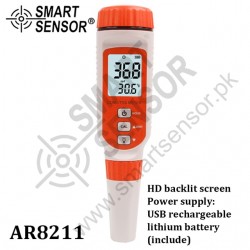
1. AR8211 Smart Sensor – Rechargeable COND/TDS Meter
The AR8211 Smart Sensor is a rechargeable digital conductivity and TDS meter designed for portable water testing. It measures electrical conductivity and estimated TDS, with temperature measurement for monitoring water samples.
Its portable design makes it useful for routine testing in laboratories, agriculture, hydroponics, aquariums, RO systems and other water monitoring applications.
Key specifications listed for AR8211:
- Conductivity range: 0–1999 µS/cm and 2.00–19.99 mS/cm.
- TDS range: 0–1999 ppm and 0–19.99 ppt.
- Conductivity/TDS accuracy: ±3% F.S. ±1 digit, as listed on the product page.
- Solution temperature range: 0°C to 60°C.
- Temperature accuracy: ±1°C.
- Power supply: 3.7V rechargeable lithium battery.
- Display: Large LCD screen.
View AR8211 Smart Sensor COND/TDS Meter
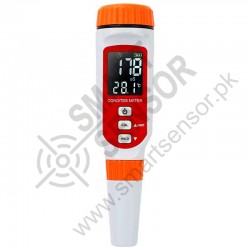
2. AR8211+ Smart Sensor – Rechargeable COND/TDS Meter with Colour Display
The AR8211+ Smart Sensor is a rechargeable conductivity and TDS meter listed with a colour display. It is designed for portable water testing and provides a digital option for users who prefer a colour-screen interface.
The AR8211+ is listed in the Smart Sensor COND/TDS category as a rechargeable model with colour display. Refer to its current product listing or contact Smart Sensor Pakistan for the latest detailed specifications, accessories and availability.
View AR8211+ Smart Sensor COND/TDS Meter
AR8211 vs AR8211+ – Model Comparison
| Feature | AR8211 | AR8211+ |
|---|---|---|
| Instrument Type | COND/TDS Meter | COND/TDS Meter |
| Power | Rechargeable | Rechargeable |
| Display | Large LCD display | Colour display |
| Measurement Purpose | Conductivity and TDS testing | Conductivity and TDS testing |
| Product Details | View AR8211 | View AR8211+ |
The AR8211 product page provides detailed measurement specifications. For the AR8211+, confirm the latest technical specifications directly from its product listing or with the supplier before purchase.
Applications of COND / TDS Meters
1. RO Water Filtration Systems
COND/TDS meters are commonly used to compare dissolved-solids readings before and after a reverse osmosis filtration system. Monitoring these readings can help users observe changes in filtration performance and identify when further inspection may be necessary.
2. Drinking Water Monitoring
A TDS meter can provide a quick estimate of dissolved-solids concentration in drinking water. It is useful for routine monitoring, but it cannot detect all contaminants or confirm that water is safe for consumption.
3. Agriculture and Irrigation
Farmers use conductivity and TDS meters to monitor irrigation water and assess changes in dissolved ionic content. These measurements can support decisions about water suitability for particular crops and growing conditions.
4. Hydroponics and Aquaponics
Hydroponic growers use EC meters to monitor nutrient solution conductivity. Changes in EC readings can help users manage nutrient solution concentration. TDS displays may also be used where the meter's conversion factor is suitable for the application.
5. Aquaculture and Fish Farming
Conductivity and TDS measurements help monitor dissolved ionic content in aquaculture water. They may be used alongside pH, salinity, temperature and dissolved oxygen measurements to assess overall water conditions.
6. Industrial Water Treatment
Industrial facilities use conductivity meters to monitor water quality in treatment processes, cooling systems, boiler feed water and other applications. Select a suitable instrument with a measurement range and performance specifications appropriate for the process.
7. Laboratories and Environmental Testing
Laboratories and environmental monitoring teams use EC and TDS measurements to assess changes in water samples and support routine water analysis. More detailed chemical testing may be required when the identity or concentration of individual substances needs to be determined.
Benefits of Using a Digital COND / TDS Meter
- Quick measurements: Obtain conductivity and estimated TDS readings without lengthy manual calculations.
- Portable design: Handheld meters are convenient for field testing and routine monitoring.
- Multiple measurement modes: Suitable models can display conductivity, TDS and temperature.
- Easy-to-read display: Digital screens make readings convenient to observe.
- Rechargeable operation: Rechargeable models reduce the need for frequent disposable battery replacement.
- Temperature compensation: ATC-supported meters can compensate for temperature-related conductivity changes within their specified operating conditions.
- Routine quality monitoring: Useful for observing changes in water and process solutions over time.
What Is ATC in a TDS or Conductivity Meter?
ATC stands for Automatic Temperature Compensation. Electrical conductivity changes with temperature. A water sample can therefore produce different conductivity readings at different temperatures even when its dissolved ionic composition remains unchanged.
An ATC-enabled meter measures temperature and applies a compensation calculation to help standardize conductivity readings. The compensation method and temperature range depend on the instrument.
ATC does not correct every possible measurement error. Proper calibration, suitable standards, clean probes and correct measurement procedures remain important.
How to Choose the Best COND / TDS Meter in Pakistan
Choosing the right conductivity and TDS meter depends on your application, expected measurement range and required performance. Consider the following factors before purchasing:
- Measurement range: Select a meter that covers the expected conductivity and TDS values of your samples.
- Measurement units: Check whether the instrument supports µS/cm, mS/cm, ppm or ppt as required.
- Accuracy: Review the manufacturer's stated accuracy and resolution.
- Temperature measurement: Consider whether temperature display and ATC are needed for your application.
- Display type: Choose a standard LCD or colour display according to your preference.
- Power supply: Consider rechargeable operation for frequent portable use.
- Calibration: Check the calibration procedure and compatible conductivity standards.
- Probe maintenance: Review probe cleaning, storage and replacement requirements.
- Application: Confirm that the meter is suitable for drinking water monitoring, RO systems, hydroponics, industrial water or laboratory use.
How to Use a Digital TDS and Conductivity Meter
Correct handling is important for obtaining consistent readings. Always follow the user manual supplied with the specific meter.
- Check that the meter is charged and ready for operation.
- Prepare a clean water sample in a suitable container.
- Rinse the probe as recommended by the manufacturer.
- Switch on the meter and select conductivity or TDS mode.
- Immerse the probe in the sample according to the recommended depth.
- Wait for the display to stabilize before recording the result.
- Rinse the probe after testing and store it as instructed.
Calibration and Maintenance of COND / TDS Meters
Calibration helps ensure that a conductivity meter provides measurements within its specified performance limits. Calibration frequency depends on the application, frequency of use, required accuracy and manufacturer's recommendations.
- Use a suitable conductivity calibration standard.
- Follow the manufacturer's calibration procedure.
- Do not touch the sensing area with fingers.
- Rinse the probe between samples to reduce cross-contamination.
- Keep the sensor clean and free from deposits.
- Use the recommended storage method for the probe.
- Check the battery or charging condition before field measurements.
- Replace damaged or worn probes when necessary.
Can a TDS Meter Confirm Drinking Water Safety?
A TDS meter alone cannot confirm whether drinking water is safe. It estimates the concentration of dissolved solids, but it does not identify the individual substances responsible for the reading.
A basic conductivity or TDS meter cannot detect bacteria, viruses and many other chemical contaminants, including specific heavy metals. Water safety assessment may require microbiological testing and laboratory analysis for relevant chemical substances.
Use a COND/TDS meter for routine dissolved-solids and conductivity monitoring, and arrange appropriate laboratory testing when you need to assess drinking water safety.
Related Water Quality Testing Instruments
Different water testing applications require different measurement parameters. Explore other water quality instruments available from Smart Sensor Pakistan:
- Water Quality Tester – Explore different water testing instruments.
- Dissolved Oxygen Meter – Measure oxygen dissolved in water.
- Digital pH Meter – Measure acidity and alkalinity.
- Salinity Meter – Measure salt concentration in water.
- Soil pH Meter – Check soil acidity and alkalinity.
Why Choose Smart Sensor Pakistan?
Smart Sensor Pakistan provides a range of digital measuring instruments for water quality, environmental monitoring, electrical testing and industrial applications. Our COND/TDS meter category offers rechargeable models for users who need portable conductivity and estimated TDS measurements.
- Digital water testing instruments for different applications.
- Rechargeable COND/TDS meter options.
- Portable instruments for field and routine water testing.
- Product information to help compare available models.
- Customer support for product inquiries and quotations.
Learn more about Smart Sensor Pakistan or contact our team through the Contact Us page for product details, current pricing and availability.
Buy COND / TDS Meter in Pakistan
Find a suitable digital conductivity and TDS meter for water treatment, RO filtration, agriculture, hydroponics, laboratories and industrial water monitoring.
Explore the AR8211 and AR8211+ Smart Sensor models and select an instrument according to your required measurement range and application.
Contact Smart Sensor Pakistan for product details, latest prices and availability.
Frequently Asked Questions About COND / TDS Meters
1. What is a COND / TDS meter?
A COND/TDS meter is a digital water testing instrument used to measure electrical conductivity and estimate total dissolved solids in water. Some models also measure temperature.
2. What is the price of a TDS meter in Pakistan?
The price of a TDS meter in Pakistan depends on its measurement range, accuracy, display, probe design and additional features. Contact Smart Sensor Pakistan or check the product listing for the latest price and availability.
3. What is the difference between TDS and conductivity?
Conductivity measures the ability of water to conduct electrical current. TDS represents the concentration of dissolved solids and is commonly estimated from conductivity using a conversion factor.
4. What does TDS stand for in water testing?
TDS stands for Total Dissolved Solids. It refers to dissolved substances such as salts, minerals and other dissolved compounds present in water.
5. What does EC mean on a TDS meter?
EC stands for Electrical Conductivity. It indicates how easily electrical current passes through a solution due to dissolved ions. It is commonly displayed in µS/cm or mS/cm.
6. Is TDS the same as EC?
No. EC is a direct conductivity measurement, while TDS is an estimate of dissolved-solids concentration. Many portable meters calculate TDS from EC using a selected conversion factor.
7. How does a TDS meter calculate TDS?
Many digital TDS meters measure electrical conductivity and multiply the reading by a programmed conversion factor. The factor depends on the instrument setting and the composition of the water sample.
8. What is a good TDS level for drinking water?
TDS readings are often considered in relation to taste and acceptability, but there is no single TDS reading that proves drinking water is safe. The US EPA lists 500 mg/L as a secondary drinking water guideline for aesthetic considerations, not as a complete health-based safety test.
9. Can a TDS meter detect bacteria in water?
No. A standard TDS meter cannot detect bacteria, viruses or other microorganisms. Microbiological testing requires suitable laboratory methods or dedicated testing systems.
10. Can a TDS meter detect heavy metals?
A basic TDS meter cannot identify or measure individual heavy metals such as lead, arsenic or mercury. Specific chemical analysis or suitable laboratory testing is required.
11. What is a TDS meter used for in an RO system?
A TDS meter is commonly used to compare dissolved-solids readings before and after an RO filtration system. These readings can help monitor changes in filtration performance, but they do not confirm the removal of every possible contaminant.
12. What is ATC in a conductivity meter?
ATC stands for Automatic Temperature Compensation. It adjusts conductivity readings to account for temperature-related changes within the meter's specified compensation range.
13. Why does conductivity change with temperature?
The movement of dissolved ions in water changes with temperature. As a result, conductivity generally increases as water temperature rises. Temperature compensation helps standardize readings for comparison.
14. What is the difference between ppm and µS/cm?
PPM represents parts per million and is commonly used for estimated TDS concentration. µS/cm represents microsiemens per centimetre and is a unit of electrical conductivity. They measure different properties and are not directly interchangeable.
15. How do I calibrate a digital TDS meter?
Calibration procedures depend on the meter model. Many conductivity-based TDS meters use a suitable conductivity calibration solution. Follow the manufacturer's instructions and use the correct calibration standard.
16. How often should a conductivity meter be calibrated?
Calibration frequency depends on usage, measurement requirements, sample conditions and the manufacturer's recommendations. For critical measurements, follow the specified calibration schedule and verify the instrument using suitable standards.
17. Which TDS meter is suitable for hydroponics?
A suitable EC or COND/TDS meter can be used to monitor nutrient solution conductivity in hydroponics. Select a meter with a suitable measurement range and conversion setting for your nutrient solution.
18. Can I use a TDS meter for aquarium water?
Yes. A suitable TDS or conductivity meter can help monitor changes in dissolved ionic content in aquarium water. However, it does not replace separate testing for pH, ammonia, nitrite, nitrate and other important aquarium parameters.
19. What is the difference between AR8211 and AR8211+?
Both models are listed by Smart Sensor Pakistan as rechargeable COND/TDS meters. The AR8211 is listed with a large LCD display, while the AR8211+ is listed with a colour display. Check their product pages for the latest detailed specifications.
20. Where can I buy a COND / TDS meter in Pakistan?
You can explore rechargeable conductivity and TDS meters from Smart Sensor Pakistan. Visit the COND/TDS Meter category to compare available models or contact the sales team for product information, current pricing and availability.